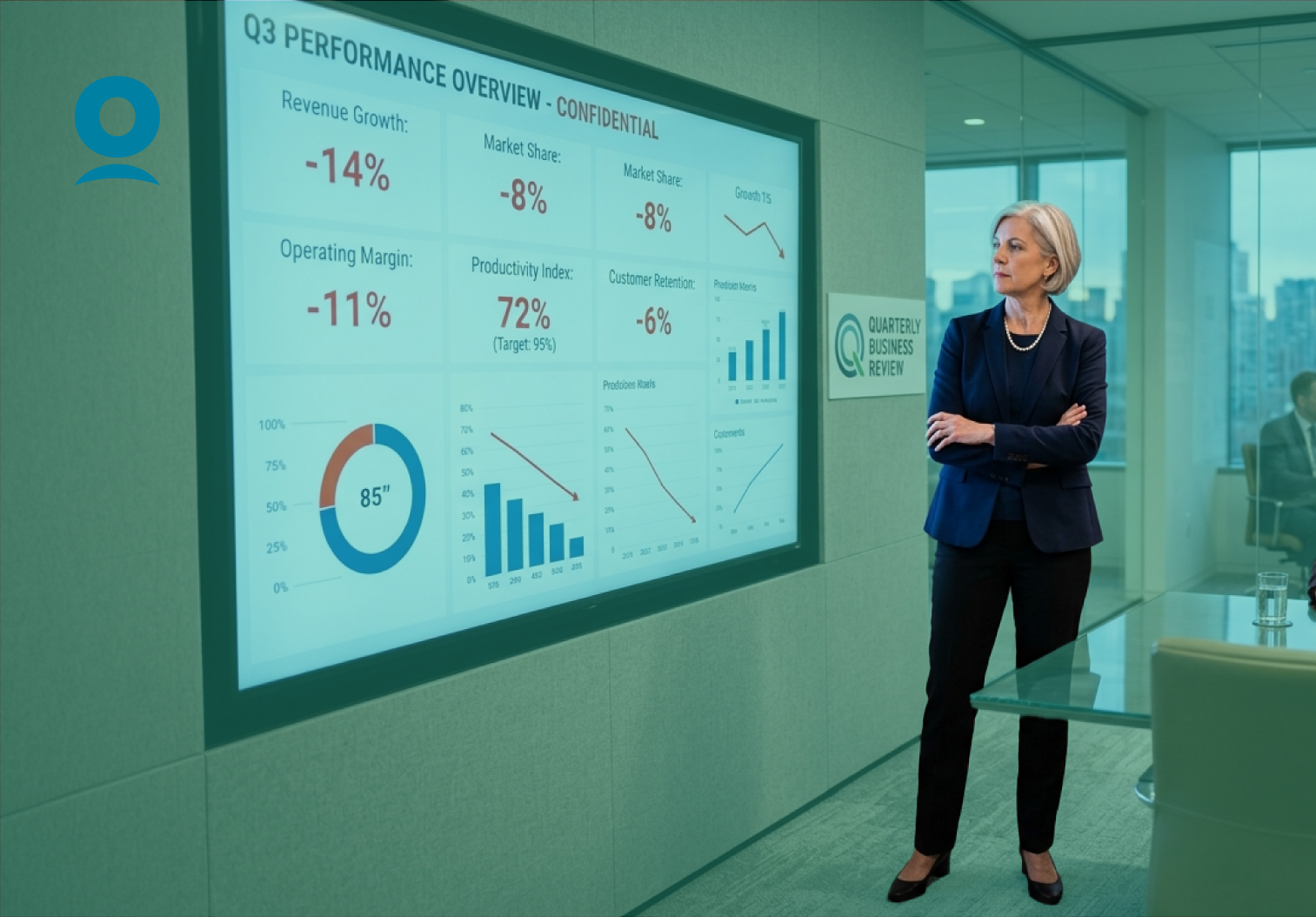
Managing Poor Performance in Senior Employees
Poor work performance is ordinarily dealt with as a form of incapacity, not misconduct. The distinction matters because incapacity focuses on the employee’s inability to meet the required standard, whereas misconduct concerns blameworthy breach of rules.
Under South African labour law, a dismissal will be fair only if the employer can prove a fair reason related to conduct, capacity or operational requirements, and a fair procedure. The Code of Good Practice: Dismissal provides the practical benchmark for assessing that fairness.
The Standard Incapacity Process
The usual poor performance enquiry aims to determine whether the employee failed to meet a performance standard, whether the employee knew or could reasonably have been expected to know that standard, whether the employee was given a fair opportunity to meet it, and whether dismissal was appropriate. This is consistent with the long-standing formulation under item 9 of the previous Schedule 8 and remains central to the new Code’s incapacity framework.
In ordinary cases, the employer is expected to evaluate the employee’s work, identify the shortcomings, provide guidance, counselling, instruction or training where appropriate, allow a reasonable opportunity for improvement, investigate the reasons for the poor performance, consider alternatives short of dismissal, and give the employee an opportunity to respond.
This raises the question of whether the full process must always be followed for a senior employee. The short answer is no, but the exception must be applied carefully.
Seniority and Fairness Requirements
While seniority does not remove the employee’s right to substantive and procedural fairness, it may affect what fairness requires in the circumstances.
The new Code expressly recognises that it is a general guide and that departures from its norms may be justified in proper circumstances. It also emphasises both employment justice and the efficient operation of the employer’s business. That flexibility is important in senior performance cases, but it is not a licence to dismiss summarily simply because the employee has “manager” or “executive” in their title.
The leading authority remains Somyo v Ross Poultry Breeders (Pty) Ltd. In that case, the Labour Appeal Court dealt with a farm manager who was dismissed after failures including not vaccinating chicks in time, not ordering feed, not adhering to feeding schedules, and not being present when day-old chicks were delivered. The Court accepted that an employer concerned about poor performance is normally required to appraise the employee, warn the employee that dismissal may follow if performance does not improve, and allow a reasonable opportunity to improve. It also recognised two important exceptions though: first, where the employee is a manager or senior employee whose knowledge and experience qualify them to judge for themselves whether they are meeting the employer’s standards; and secondly, where the job requires an extremely high degree of professional skill and the consequences of even a small departure from that standard are so serious that one failure may justify dismissal.
Defining Senior Employees
“Senior” is not determined by job title alone. A senior employee is someone whose role, autonomy, expertise, and accountability place them in a position where they should know what acceptable performance looks like without extensive counselling. Relevant indicators include whether the employee:
- Manages a department, business unit, or function;
- Has strategic or operational control;
- Supervises others;
- Carries financial, legal, safety, reputational, or governance responsibility;
- Is employed because of specialist professional expertise;
- Has significant decision-making authority; and
- Is expected to set or monitor standards rather than merely comply with them.
The closer the employee is to executive, senior managerial, or highly skilled professional accountability, the stronger the argument that the employee can reasonably be expected to self-assess performance against the required standard.
The Limits of the Seniority Exception
Employers should avoid treating seniority as a shortcut. The better formulation is that the employer may dispense with, abbreviate, or adapt the normal incapacity process, rather than dispense with fairness altogether. Even in senior cases, the employer should still be able to prove the existence of a reasonable standard, the employee’s failure to meet it, the employee’s actual or reasonably imputed knowledge of the standard, and the appropriateness of dismissal. The Code’s general poor-performance test remains relevant, but the content of “fair opportunity” may be different for a senior employee.
The principle was developed further in New Forest Farming CC v Cachalia & others, where the Labour Court considered a farm manager of approximately ten years’ standing whose employer lived permanently in Zambia. The farm manager was dismissed for poor work performance after the farm had been self-sufficient in only one of the previous ten years, but the Commission for Conciliation, Mediation and Arbitration (CCMA) found the dismissal unfair because, although his performance was objectively substandard, there was no evidence that he had been informed of the required performance standards. The case is frequently cited for confirming the Somyo exceptions. The Court accepted that the ordinary requirement to appraise, warn, and allow improvement may not apply where the manager’s disposition, knowledge, and experience enable them to know instinctively whether they are meeting the required performance standards, or where the professional standard is so high and the consequences of failure so serious that a single failure may justify dismissal.
The policy reason for this approach is practical. In JDG Trading (Pty) Ltd t/a Price ’n Pride v Brunsdon, the Labour Appeal Court recognised that an employer’s business should not have to suffer to the detriment of all concerned through the ineptitude or inefficiency of a particular employee. The same case law tradition also reflects the common sense idea that an experienced executive who needs basic counselling on the fundamental requirements of their senior role may, by that very fact, be unsuited to the role. But this does not mean the senior employee loses the right to be heard; the audi alteram partem (“hear the other side”) principle remains a minimum requirement.
The limits of the exception are illustrated by Palace Engineering (Pty) Ltd v Ngcobo and Others. The employee was a senior manager/chief operations officer on probation, required to meet substantial performance targets relating to new infrastructure work. The Labour Appeal Court accepted that senior employees are expected to monitor their own performance but confirmed that the employer still bears the onus to prove fairness, and must provide essential resources and a fair opportunity where those are necessary to achieve the required standard. The case is an important warning: Even a senior employee cannot fairly be dismissed for failing to meet targets that are unclear, unrealistic, moving, or impossible to achieve because the employer failed to provide the tools, authority, information, or support needed for success.
Similarly, seniority does not remove the need for a fair procedure. In Nationwide Airlines (Pty) Ltd v Mudau & others, the employer relied on the employee’s seniority after dismissing him following a failed flight simulator test, but the Court upheld the finding of unfairness where he was not given proper procedural protections, including representation and access to the test results. This is consistent with the broader principle that a senior employee may require less counselling, training or hand-holding, but must still be told the case against them and be given a meaningful opportunity to respond before dismissal.
The recent Abels v University of Stellenbosch and Others decision is also useful because it shows how courts look at the totality of the employer’s process, especially where the employee raises health-related issues. The employee, a faculty administrator, was dismissed for incapacity related to poor performance after meetings, written representations, and a notice-based termination process. The Labour Court dismissed the review and confirmed that the dismissal was substantively and procedurally fair. The Court noted that the employee had admitted performance concerns before his depression diagnosis, that the employer had attempted to accommodate him, and that he failed to establish a direct link between the depression and the poor performance. The lesson is that where poor performance may overlap with ill health, the employer should investigate the true cause and consider accommodation before proceeding purely on poor performance.
When a Shortened Process is Defensible
In practice, an employer may be on safer ground in departing from the normal incapacity process where:
- The employee occupies a truly senior or highly skilled role;
- The performance standard is inherent in the role or clearly communicated through the contract, Key Performance Indicators, strategy documents, professional duties or business targets;
- The employee has the experience and authority to know whether they are meeting that standard;
- The failure is serious, measurable and consequential;
- Further counselling or training would be artificial or futile; and
- The employee is nevertheless given an opportunity to answer the allegations before the final decision is made.
The converse is equally important: The employer should not dispense with the normal incapacity process merely because the employee earns a high salary, has long service, carries a senior-sounding title, or is unpopular with the board or management team. A shortened process will be risky in cases where:
- The standard was never communicated;
- The employer tolerated the under-performance for a long period without objection;
- Targets were unrealistic;
- The employee lacked the required resources; or
- The alleged failure is really misconduct, incompatibility, ill health, or operational restructuring dressed up as poor performance,.
Asking the Right Question
The safest approach is therefore not to ask, “Is this employee senior enough for us to skip the process?” The better question is: “Given this employee’s level, expertise, and accountability, what would a fair performance process reasonably require?”
For a junior or ordinary employee, fairness usually requires detailed counselling, training, monitoring, and time to improve. For a senior executive or specialist, fairness may require a direct confrontation with the performance failures, a chance to explain, and a reasoned assessment of whether continued employment is viable.
What may be dispensed with is the extended remedial process; what may not be dispensed with is proof, reasonableness, and the opportunity to be heard.
The Key Distinction for Employers
Ultimately, South African labour law permits a more robust approach to poor performance by senior employees, but only where the facts justify it.
Somyo, New Forest Farming and JDG Trading support a relaxation of the ordinary incapacity process for genuinely senior or highly skilled employees who should know and meet the required standard without intensive guidance.
Palace Engineering, Nationwide Airlines and Abels remind employers that the relaxation has boundaries in that the standard must be fair, the employee must have had the means to meet it, and the employee must still be afforded a fair opportunity to respond.
The employer who keeps those distinctions clear will be far better placed to defend a senior poor-performance dismissal at the CCMA, a bargaining council, or the Labour Court.